LNHL 10

William Douglas has been writing The Color of Hockey blog since 2012. Douglas joined NHL.com in 2019 and writes about people of color in the sport. Today, he profiles the Little Native Hockey League, an annual tournament for Indigenous youth in Ontario. More than 4,500 boys and girls will participate in this year’s tournament, which began Sunday and runs through Thursday in Markham, Ontario.

Ted Nolan said he wouldn’t have reached the NHL without the LNHL.

Nolan played in the Little Native Hockey League (LNHL), an Indigenous youth hockey tournament in Ontario, as a teenager in the late 1970s.

It gave him a confidence boost that carried him to 78 games as a forward with the Detroit Red Wings and Pittsburgh Penguins from 1981-86 and 471 games coaching the Buffalo Sabres (1995-97 and 2013-15) and New York Islanders (2006-08).

“I owe my whole hockey career to the Little NHL because, at the time when I played, I wasn't very welcomed anywhere else,” said Nolan, who is Ojibwe. “When I went to my first Little NHL tournament, I had just seen other players that were really, really good, that looked like me. I'm going, ‘Man, oh man, if they could play this game, I could even be better.’  It was a stepping stone to launch my career because it gave me a sense of belonging because before then, I didn't have that sense in hockey.”

Nolan reflected on his experience ahead of attending the 52nd LNHL tournament, which began Sunday and runs through Thursday at Centennial Community Centre and other arenas across the Markham, Ontario area.

LNHL 13

This year’s tournament is the largest ever with 4,500 Indigenous boys and girls from 5-17 years old representing their nations on 272 competitive and recreational teams, playing 680 games on 16 ice sheets at 12 facilities, said Gerard Peltier, the LNHL’s director of hockey operations.

“It's something unique,” Peltier said of the tournament. “It's a hidden gem that not too many people know about.”

LNHL president Marian Jacko said the tournament is about more than just hockey; it's a massive cultural celebration and family reunion founded on “four pillars” of citizenship, respect, education and sportsmanship.

“It’s a time for families to get together because a lot of them never see each other throughout the year,” Jacko said. “We have families that come from the far, remote north, and it takes them upwards of three days to get to Markham. They have to transfer their transportation modes on anything from Ski-Doo to ice road to train to charter bus. For some of those kids in the far north, they never get to leave their communities until now. So it's a pretty big deal.”

LNHL 7

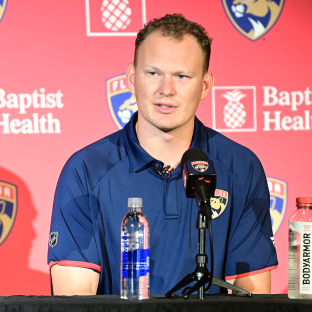
Playing in the LNHL is generational for many families; Nolan’s sons, Jordan and Brandon, skated in the tournament on their way to reaching the NHL.

Jordan Nolan, a forward, played 375 NHL games with the Los Angeles Kings, Sabres and St. Louis Blues from 2011-19 and won the Stanley Cup twice with Los Angeles in 2012 and 2014. Brandon Nolan, also a forward, played six games with the Carolina Hurricanes in 2007-08.

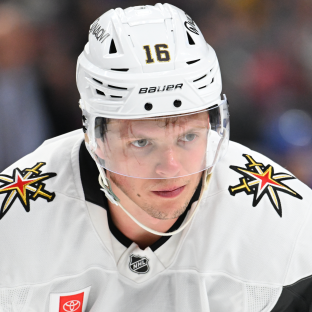
Jonathan Cheechoo, a forward who played 501 games with the San Jose Sharks and Ottawa Senators from 2002-10, followed his father, Mervin, into the tournament. Cheecho watched his son, Jack, play in 2018. 

“It's a special place to be, and it's something that I think everyone looks forward to once a year,” Jordan Nolan said. “I was about 6 or 7 years old when I first played in it, and we’ve come as much as we can over the years. And now to watch my nephews and nieces play, it’s definitely special.”

LNHL 5

The LNHL was founded in 1971 by community leaders in Little Current on Manitoulin Island with 17 teams and 200 players to provide an outlet for First Nations youth to play, compete and to counteract the racism they encountered in other communities.

“Back in those days, it was very hard for us to get into a tournament, let alone be accepted,” Peltier said. “Our founding fathers put together a hockey tournament, and it just took off.” 

The LNHL began as mainly a boys' tournament, with girls occasionally playing on boys’ teams. Organizers added a girls’ division in 1999 with five teams, which has expanded to a record 55 teams at this year’s tournament.

Chico Ralf, LNHL vice president and founder of the girls' division, said the increase is a testament to the success of the Canadian and United States women’s national teams on the international stage and the popularity of the Professional Women’s Hockey League.

“I'm a Mohawk from the Iroquois confederacy and we have so much respect for our clan mothers and our elders," said Ralf, whose daughter and granddaughter each played in the LNHL, "so that's why I've always supported our women and our young girls, because I feel they're the strength of our communities and our people. 

“It’s been a success and everyone has enjoyed it. And so we keep pushing it forward.”

Related Content