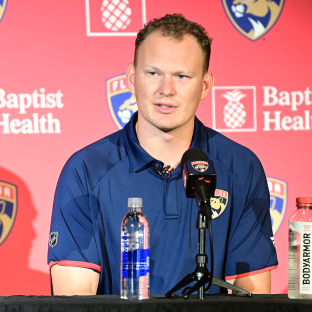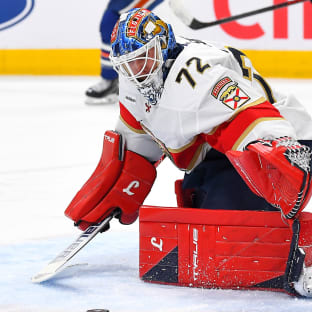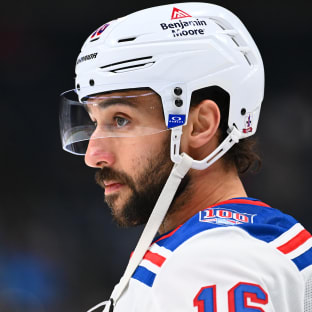


Patrick Marleau and Joe Thornton first became pals as teenagers while playing for a Canadian rep team in the mid-1990s, a relationship, both on and off the ice, that has flourished for the subsequent three-plus decades. The two were picked No. 1 and No. 2 in the 1997 NHL Draft, Thornton going first to the Boston Bruins, Marleau second to the San Jose Sharks. For 13 seasons -- from 2005-17 and then again in the 2019-20 season -- they were teammates with the Sharks after Thornton was acquired from the Bruins in one of the NHL’s biggest all-time blockbuster trades. These days, they live about five miles away from each other in the Bay Area and continue their lasting friendship in retirement. As such, who better than Marleau, who will be on hand for Thornton’s induction into the Hockey Hall of Fame on Monday, to give NHL.com readers an inside peek behind the scenes at what Jumbo Joe, one of the sport’s biggest personalities, is really like.
First off, this is a very emotional subject for me.
It’s a challenge for me not to well up a bit when the discussion of Joe Thornton going into the Hockey Hall of Fame comes up. That’s how great a teammate he was. That’s how great a friend and role model he was.
Still is.
Here’s an example.
When I found out about his induction back in June, I called Joe right away to congratulate him. Typical Joe. He was more interested in pumping my tires more than pumping his own. It was like: “Ya, you know, it’s good. Hey, you’ll be there in the Hall one day like me.” This was his special day and he was more focused on wanting to make me feel good about myself.
That’s Joe.
When I think about him going into the Hall, I think back to all the days of working, of grinding, of staying the course no matter what kind of mental and physical grind he was going through.
There’s an image of Joe being this happy-go-lucky figure, someone who can put a smile on the face of anyone who meets him. And trust me, he’s all that. What people don’t see is that he never took a day off. It wasn’t easy. But no matter how bad things would get, he’d be there the next morning getting his work in.
And a lot of times, he’d be doing it with a smile on his face.
That’s one of the things I learned from Joe.
If I had a crappy game or if things weren’t going our way, I would carry that with me sometimes. Not Joe. His philosophy always was: “Nothing you can do about it now. What we can do is attack the next challenge. So let’s go!” He’d often be chuckling when he said it. Laugh about it, work to be better for the next time, and move on.
His attitude certainly helped change mine over the course of our careers. He helped teach me to concentrate on what’s ahead, not what just happened, and not to get down on myself as much as I used to.
Then again, it’s hard to get down on yourself when you’re around Joe.