
mailbag_jarry_120325

NHL.com's weekly Over the Boards mailbag is in full swing this season. Every week, senior writer Dan Rosen sifts through your questions sent to him on X and chooses several to answer.

To participate in future mailbags, send your questions to @drosennhl on X and use #OvertheBoards.

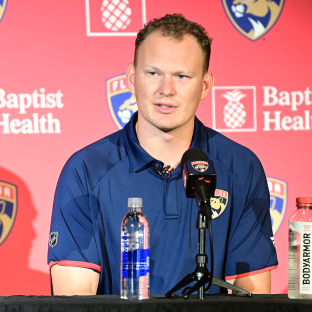
What is the level of interest in Tristan Jarry from the Edmonton Oilers? -- @HockeyGuy66871

We see this happen often; when one player at a key position is not performing up to expectations, fans and pundits immediately look for solutions, and they target another player at that same position who comes with his own set of question marks. This is the case with the Oilers and Stuart Skinner, and the Pittsburgh Penguins and Tristan Jarry.

The Oilers know what they have in Skinner. He has been their No. 1 goalie for consecutive runs to the Stanley Cup Final. It's fair to also say he is among the culprits for why they didn't win the Stanley Cup in either run. He has also been inconsistent this season. Connor McDavid's two-year, $25 million contract ($12.5 million average annual value) that carries him through the 2027-28 season essentially gave the Oilers their window to win the Stanley Cup. There are legitimate questions about Skinner and his ability to be the goalie that helps them get it done, which is why there is so much trade chatter around his name, especially because he is in the last year of his contract, carries a $2.6 million AAV and can become an unrestricted free agent after this season. If the Oilers don't see him as the solution in goal, then moving him before the 2026 NHL Trade Deadline on March 6 makes sense.

But Jarry has a history of injuries, including a lower-body injury that kept him out for seven games last month. His past two seasons left a lot to be desired. He's been better this season, which makes him intriguing, but he also has a $5.375 million AAV through 2027-28 and he has played in eight Stanley Cup Playoff games, the last being in 2022.

The only way the Oilers make a move for Jarry is if they believe he's the goalie that can lead them to the Cup. That's it. That's the task. Anything short of that in the next three years is a failure. They can speculate that he has the goods to do that, but they don't know. It's a risk, especially considering they're also buying the next two years of his contract. They do, however, know that Skinner can get hot and get them into the Stanley Cup Final. So, do the Oilers believe they're better off with Jarry, knowing his injury history and lack of big-game experience, than they are with Skinner or another goalie who might become available? Or is this a lateral move for now with additional risk for later that just doesn't make much sense to them?

Those are the questions for the Oilers when it comes to Skinner and Jarry. The answers determine the interest.

PIT@SJS: Jarry blanks Sharks for the 22nd shutout of his career

Do the Columbus Blue Jackets have a realistic shot to get Kiefer Sherwood from Vancouver? Any other realistic trade targets for CBJ? -- @mstuart142

Sure, they have a realistic chance, and we should toss the Blue Jackets onto the pile of teams that should have interest in Sherwood, the 30-year-old pending unrestricted free agent forward who entered Tuesday leading the Vancouver Canucks with 12 goals.

The Blue Jackets’ specific need might be on defense, but they can't turn away from Sherwood, who is from Columbus and grew up in the Ohio AAA Blue Jackets program. He is exactly the type of player any contending team in need of top-nine forward help is looking to acquire.

He gets his nose dirty going to the hard areas of the ice. He can play on any of your top three forward lines. He scores goals. He plays on the power play. He kills penalties.

Even better, Sherwood comes with an NHL salary cap charge of $1.5 million, and there's no commitment to him beyond this season because he is in the last year of a two-year, $3 million contract.

The Blue Jackets are in the hunt for the playoffs. They're not in rebuilding mode. They're looking to make noise. They're on the cusp. So, yes, Sherwood makes sense for them.

He also makes sense for the New York Islanders, who lost Kyle Palmieri to a torn ACL. He makes sense for the Rangers, who have a hole in their top-nine forward group.

Sherwood also makes sense for the Philadelphia Flyers and Penguins, who are both trying to compete with the Rangers, Blue Jackets and Islanders for a playoff spot in the Eastern Conference.

The Canucks are in an enviable position with Sherwood, especially if they aren't inclined to re-sign him, because it’s going to cost them far more than his current $1.5 million AAV, and he's already 30.

It will be interesting to see how it plays out with Sherwood and how long it takes for the Canucks to move him if that is indeed going to be their plan. But the Blue Jackets should be in the mix. It's a crowded market for a hot commodity.

VAN@STL: Sherwood strikes thrice for second NHL hat trick

Since Macklin Celebrini has been having the sophomore year of his career, apparently, we know what he is now, and that his ceiling is absolutely absurd. What are your thoughts on him so far? Where do you see the Sharks next season? How do you view their future on the blue line? -- @FelixTalksPucks

My thoughts on Celebrini are that he is already a superstar, as talented as he is charismatic. The San Jose Sharks hit a home run by winning the NHL Draft Lottery and being able to select the center with the No. 1 pick in the 2024 NHL Draft. He's elite with the puck and he's developing a strong game away from it. He will be the face of hockey in the Bay Area for years.

As for the team, the Sharks are obviously improved, with Celebrini, 19, forward Will Smith, 20, and goalie Yaroslav Askarov, 23, leading them. That's great and all, but let's see where things stand for San Jose as the season continues and we get to the point when the playoff races are on fire. I have no doubt Celebrini will be able to handle it. That's what superstars do. But is the team ready for that? Is it deep enough?

We'll find out the answers, but the longer the Sharks stay in the mix, the better it will make them for next season. They're growing like the Chicago Blackhawks are this season. The most recent example to follow is the Anaheim Ducks. They added more experienced players around their youth, made significant strides last season, and now this season they're challenging for first place in the Pacific Division.

It's on the back end where the Sharks need the most help. They have Celebrini, Smith, William Eklund and Michael Misa, the No. 2 pick in the 2025 NHL Draft, up front. They have Askarov in goal. What they don't have is a top defenseman. They're hoping it's going to be Sam Dickinson, who was the No. 11 pick in the 2024 draft. He has played 20 games this season in sheltered minutes. He's also 19, and not everybody is Matthew Schaefer. They like Luca Cagnoni and Shakir Mukhamadullin. There's hope on the blue line, but it's going to take a while to see it all develop.

But the Sharks might be graduating from the days of picking in the top four of the draft as they have done the past three years in getting Misa, Celebrini and Smith (No. 4 in the 2023 NHL Draft). Now it's about growth and development, and filling in with impactful, experienced players.

SJS@VGK: Celebrini reaches milestone on Smith's PPG

With the Canucks’ struggles, people are talking about a Quinn Hughes deal. We've heard about teams like the Flyers or Devils for obvious reasons, but one team I'd be curious for interest would be the Blackhawks. Could you see that happening without an extension? -- @punmasterrifkin

It's hard to characterize what a trade for Hughes would look like right now, and the impact his contractual situation would have on that trade. He can't sign his next contract until July 1, so if the Canucks were to make him available this season, all teams looking to acquire the defenseman would be going in somewhat blind about Hughes' future. Maybe the New Jersey Devils would be different because they also have his brothers, center Jack Hughes and defenseman Luke Hughes, and you have to assume that Quinn would want to stay with them. But beyond that, it's hard to predict, which adds to what is already an intriguing, burgeoning storyline around the Vancouver captain.

The Blackhawks are an up-and-coming team and Hughes, at 26 years old and approaching 500 NHL games this season, fits into their short- and long-term plans. But I think it's hard for them or any team to enter into trade discussions with the Canucks about Hughes without knowledge of his future plans. That's not the Canucks' concern, of course, but maybe it makes more sense for Hughes' market if Vancouver waited until July 1, when the sign-and-trade becomes viable.

Remember, the Carolina Hurricanes made a blockbuster trade last season to acquire forward Mikko Rantanen from the Colorado Avalanche. He was in the last year of his deal, so a contract with the Hurricanes was available. But they were banking on the ability to sell their organization, market, team and style of play to entice him to sign. It broke down because Rantanen didn't want to stay there. So, the Hurricanes traded him to the Dallas Stars, who signed him to an eight-year, $96 million contract ($12 million AAV).

The Hurricanes have survived that, but they're built to survive by how they play and the fact that they're already a winning franchise. It would be a potentially massive fail for the Blackhawks to give up the assets it will take to acquire Hughes only to then have to trade him somewhere else. The Blackhawks are growing and getting better, but they're not expected to be a Stanley Cup contender this season. It likely will be better for them to wait and hope the market for Hughes is still alive in the offseason, if there is a market for him at all. There's risk in that, but that risk, at least to me, outweighs the uncertainty of acquiring him without the guarantee of a long-term contract.

CGY@VAN: Hughes buries his own rebound on the power play